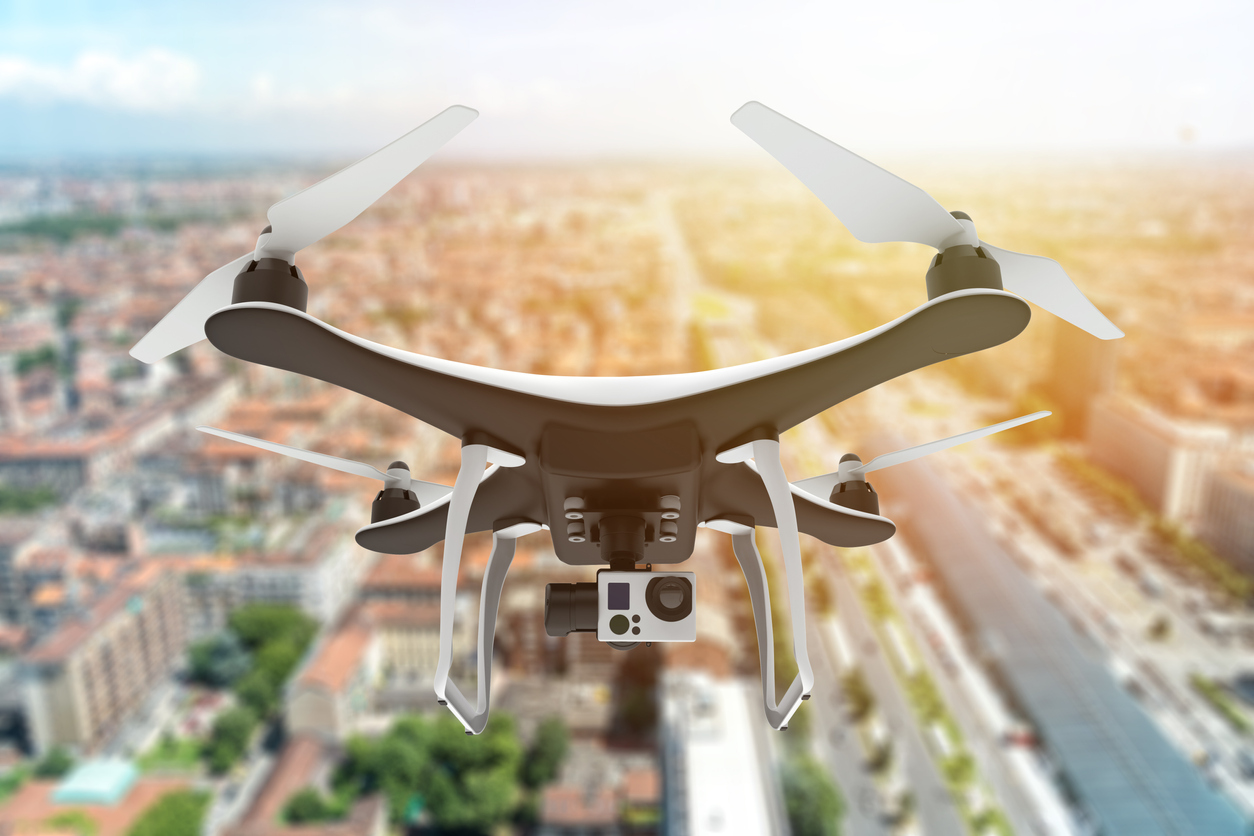
Drone photography can be defined as the capturing of still images and video footage via an autonomous UAV (unmanned aerial vehicle) by remote operation. Its main aim is to achieve a first-person view that would otherwise be impossible to achieve.
The use of drones has changed the way that photographers earn a living. With the demand for spectacular images never greater, anything that can give a photographer that edge, that better angle or closer position, surely should be considered an investment. The investment, of course, being in technology. Not the investment in a longer lens for their old camera, but in a drone with a camera attached that will take the most amazing images from the most inaccessible of places. A place that other photographers, perhaps competing for work in your same market area, have yet to discover. It is always best to be among the pioneers for any technology.
With all this in mind, there any many companies on the internet that can get you started with drone technology capable of advanced, even extreme photography, if I may term it that way. Companies including DJI, for instance supply these gadgets.
So, let us explore the kind of photographic situations where drones could be of particular use.
Wildlife
The low noise levels generated by drones allows for animals to be taken without being spooked. This creates the most natural and stunning of photographs of nature. Animals can be photographed that would not let humans that close to them. If they did, that would have a danger attached to it. People like to see animals free and in their natural environment. Drone photography can achieve that. A natural environment and a natural pose. By clicking on wildlife photographs, you can read and see for yourself what can be achieved.
Buildings and Landscapes
The advantage of drone technology is that it allows for photographs and footage to be taken that would previously only have been taken by planes or helicopters. Drones are now allowing for aerial photography to be carried out more cheaply and in even more inaccessible places. You will be able to create images of high resolution from the panoramic shots that you take, or rather your drone takes.
Industry
In industry, drones are considered a safer way to photograph situations where there are say dangerous chemicals at work. The construction industry will put plans together from drone images. In engineering, drones are used for inspecting dams, and making assessment with regards to foundation cracks in areas affected by landslides.
Tips
There will be different techniques and features to consider when using a drone camera, but they will be well worth it to add that extra dimension to your photography.
For some drone photography tips, you might like to consider the following:
Check UVA Forecast
This will indicate whether it is safe for you to operate the drone, and whether you likely to achieve any worthwhile photographs for your efforts.
Use lens filters
These are useful when working in difficult lighting conditions.
Shoot in RAW format
This increases the versatility of the image after processing. It means that your images will not be compressed, and you will receive lossless image data via the sensor. It preserves resolution and brightness levels. Most high spec drones will come with an onboard camera that supports RAW format.
Techniques
Consider improvising, looking for symmetry and other patterns, playing with shadows and light, taking advantage of the auto exposure bracketing (AEB), and switching between the aspect ratios of 16:9 and 4:3. It should be noted that 3:2 is the usual aspect ratio with digital cameras, but drone cameras offer wider formats. AEB will help you to capture extremely realistic photographs that have a high dynamic range. In addition, you might find it better to remain at a lower ISO and use the thirds grid overlay with regards to composition. Drone cameras normally have smaller sensors, so will work better at higher ISO settings. It will just be a case of manually adjusting the settings of your camera so that the image is kept properly exposed. The rule of thirds is about dividing an image using 2 horizontal lines and 2 vertical lines. The important elements of a scene will be put, or positioned, along these lines.
So, whether you are a wildlife or aerial photographer, or work in other industries where it is necessary to take pictures for construction, mining, or conservation purposes, there will be benefits that can be obtained from knowing about drone photography.

