
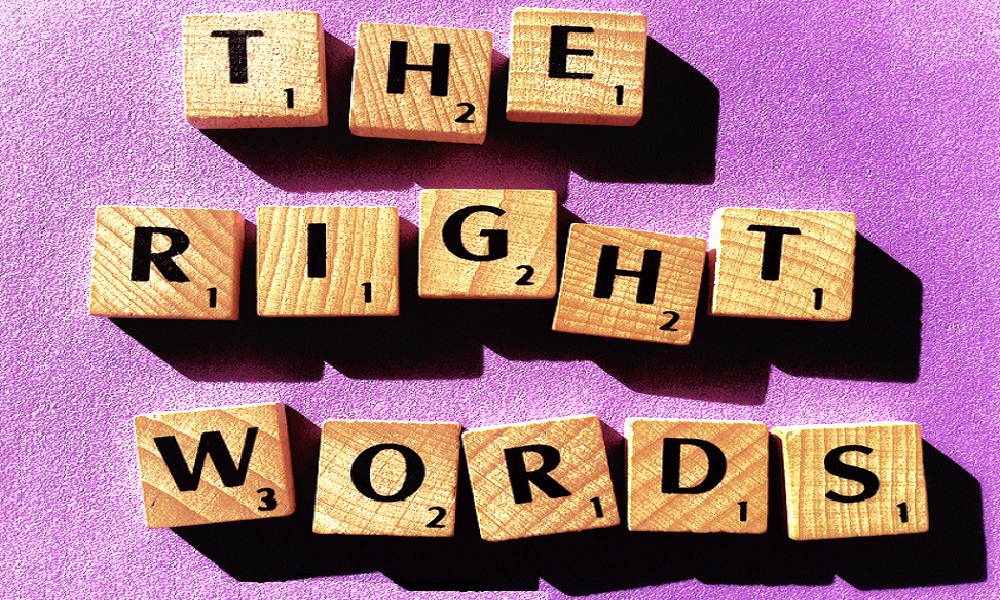
 Whether the spoken or written word, when communicating with clients in person, over the phone or by email, it’s imperative that you choose your words wisely. This not only involves avoiding slang words (colloquial speech) that they might a) not understand, b) misinterpret, or c) think less of you for using, as it also involves, amongst other considerations, the avoidance of technical jargon that could make them feel as though you’re talking down to them.
Common mistakes – How many are you guilty of?
- Technical jargon
A common mistake that professionals make when communicating with our clients is using words that we, as business, legal or medical professionals for example, use on a regular basis but our clients aren’t familiar with.
Think for a moment about having a conversation with someone, in your native tongue, and all of a sudden the conversation became incomprehensible due to the vocabulary used. Whilst you’re still able to make out familiar words here and there, the meaning of the conversation, and where the conversation is going, becomes anyone’s guess.
The point to this is to see things from the client’s perspective because it suffices to say that you, like they, wouldn’t feel too good about yourself at that particular point in time, in fact, there’s a good chance you’d feel rather stupid.
Therefore use layman’s terms where possible and if they look lost ask them if they’re following you, just as someone with excellent presentation skills would when conducting a conference, though of course do so in such a way so as to not exacerbate the situation.
- Long and arduous
This is a consideration that affects the written word more so than the spoken word, though many of us are also guilty of not conversing succinctly – we’re all guilty of waffling on at times.
Keep your written communication short and sweet and summarise the points you’re making so your client fully understands what your email or letter is all about; moreover, ensure it’s written in such a way so they don’t lose interest and miss something important.
- The wrong words and phrases
Some words and phrases are simply wrong because they convey the wrong message or make us come across as though we feel superior to the client. Whilst that usually isn’t the case, the damage might already be done and you’re off on the wrong foot – so much for great first impressions!
A phrase you should avoid when communicating with your clients is ‘Here’s your problem’. Would you like to be told you have a problem? Chances are you wouldn’t, so instead of something overwhelmingly negative opt for something more positive and instead of ‘you’ use ‘we’, which makes it sound as though you’re involved and working together. ‘Here’s our challenge’, or ‘Here’s the challenge we face’ would be much preferable.
‘I’ll try’ is another phrase to avoid because it makes you sound as though you’re unsure about your capabilities, if not totally incompetent, so replace ‘I’ll try’ with ‘I will’, which is much more certain, determined and much more capable of instilling trust in your clients.
‘You should …’ is another phrase many of us are guilty of using with our clients, one that makes us come across as authority figures or someone who’s superior to others. ‘What if …’ is much better, as is ‘What about we …’, or ‘How about you …’, or at the very least, ‘You could …’, because these are suggestions and are therefore much better for establishing healthy relationships with our clients.
Take note of these considerations to communicate more effectively with your clients.
Author Bio:
Zoe George is a freelance writer for BodyTalk, a group of specialists who train people to improve their communication and presentation skills. They cater to clients not only around Europe but also in America and the Middle East.
You must be logged in to post a comment.