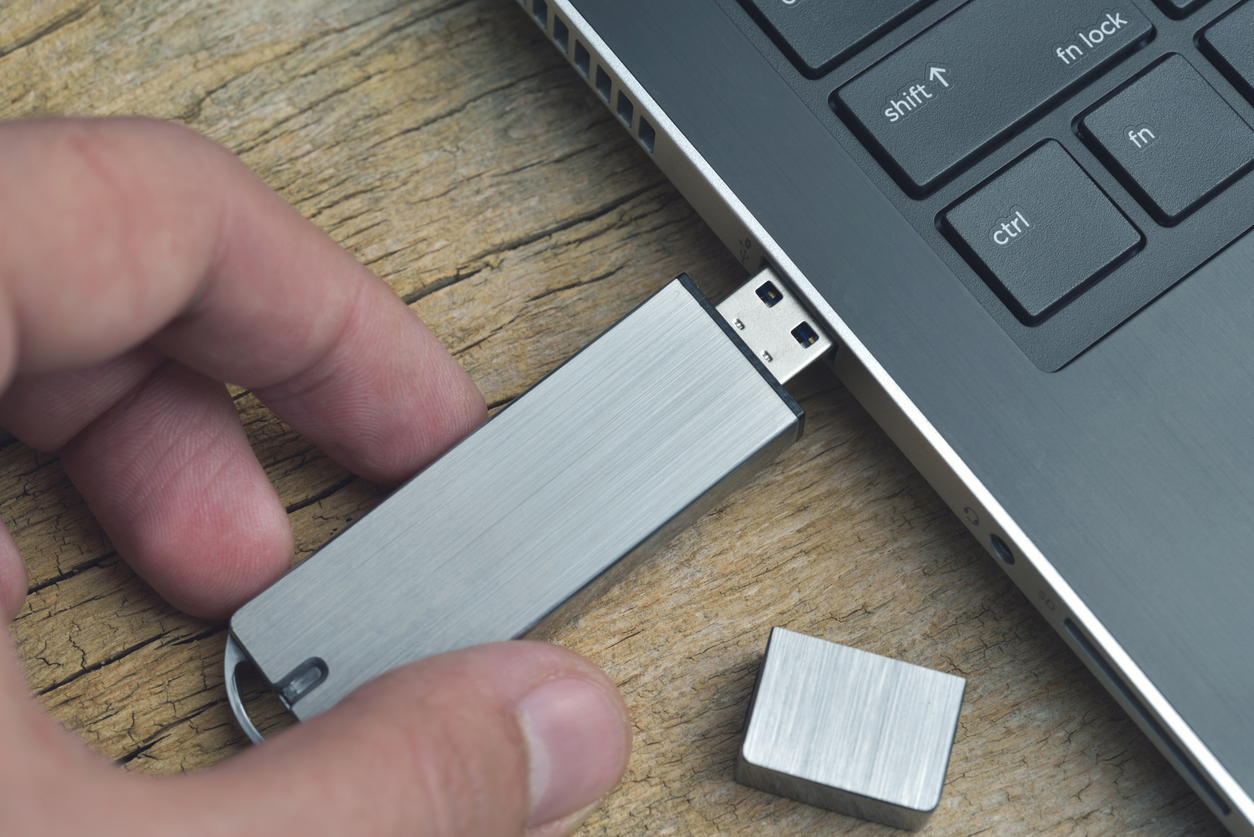
Businesses relying on cutting-edge devices are increasingly dependent on removable devices like USB drives, external hard drives and SD cards in order to remain competitive and efficient. And let’s not forget about the bigger ones like laptops, tablets and even our work phones. Removable devices offer portability and ease of use that can make business life simpler. But using such removable options comes with its own set of risks that must be balanced out against potential benefits when considering whether and how best to use them.

Photo by Lauren Mancke on Unsplash
Types of Removable Devices: Convenient Tools or Tiny Terrors?
- USB Drives: USB flash drives are one of the most ubiquitous removable devices. Their small size makes transferring data between computers simple, while they store large files without breaking a sweat. Unfortunately, their tiny form factor also makes them easy to misplace or steal.
- External Hard Drives: With ample storage capacity and security measures in place, these devices make an excellent way to back up large amounts of data. Businesses frequently utilize them to transport or store important documents offsite. However, without encryption and adequate protection measures in place they could become vulnerable targets for data breaches.
- SD Cards: Though small in size, SD cards are powerful tools in devices such as smartphones, cameras and tablets. Their expandable storage solutions enable businesses to store additional documents or media content. Though their miniaturized dimensions make them easily lost and could potentially become delicate over time.
Risks on the Horizon: Small Devices, Big Problems
With portable and removable devices comes potential security threats, businesses should remain alert against such small but significant threats to protect themselves effectively from them.
- Data Breaches: Unprotected devices can easily be accessed by unauthorized people, potentially leading to sensitive data leakage.
- Malware Infections: Removable devices that are frequently shared can inadvertently transport malicious software between systems, disrupting operations and leading to data loss.
- Loss or Theft: Misplacing or losing removable devices or experiencing theft could put sensitive business data in the wrong hands, jeopardizing business operations and leading to reputational damage for the organization.
Solutions: Safeguarding Your Business One Device at a Time
But, don’t crumble just yet, as there is an answer out there. In this instance, there are several strategies businesses can use to mitigate risks associated with removable devices:
- Encryption: Protecting the data stored on removable devices with encryption ensures that even if they are lost or stolen, its content remains protected and cannot be accessed by the wrong people.
- Policy Creation: Establishing stringent policies regarding the use and management of removable devices within your business can create greater awareness among employees while setting clear expectations.
- Conduct Regular Audits and Monitoring: Regular checks on device usage and data transfers can help identify any irregular activities or policy breaches that might otherwise go undetected.
- Employee Training: Conducting employee education sessions on best practices for using and handling removable devices can significantly decrease the chance of accidental data breaches.
The Growing Role of Bigger Removable Devices in Business
The growing importance of bigger removable devices like laptops, tablets, and work cellphones to operations is becoming an integral part. These devices provide flexibility and ease of work for employees on-the-go bridging traditional office setups with modern, more versatile approaches to work. But while these advantages offer flexibility they come with their own set of risks that must be carefully managed for business continuity and data security purposes.
Types of Bigger Removable Devices
- Laptops: Laptops provide all of the capabilities of desktop computers while being much more portable, enabling employees to perform robust computing tasks outside the office environment.
- Tablets: Light and highly portable, tablets provide quick access to information, making note taking and presentations simpler than ever. Their touch-screen technology also makes them an intuitive choice for field work.
- Work Cell Phones: With so many applications onboard these multifunctional phones, these devices have become important tools for communication and remote work, providing email, app access, internet browsing capabilities in a palm of your hand.
Risks Associated with Bigger Removable Devices
While bigger removable devices are important to modern business, they also present specific risks:
- Data Breaches: Laptops, tablets and work cell phones often store large volumes of sensitive company data that needs to be protected against cybercrime. Without adequate protection in place they become easy targets for cybercriminals.
- Physical Security Threats: Due to their portability, portable devices like smartphones can become susceptible to loss or theft, potentially giving thieves access to confidential business data without authorization.
- Malware Injection: Devices connected to public networks or shared devices may be subject to malware infections that may disrupt operations and compromise data integrity, placing operations at risk.
Mitigating Risks: Solutions for Business
Businesses can implement the following solutions to address these risks:
- Secure Access Controls: Implement strong password policies, biometrics or multi-factor authentication to safeguard devices and the data they store.
- Regular Software Updates and Patching: Keeping your device’s OS and software current will protect against vulnerabilities exploited by malicious entities.
- Remote Wipe Capabilities: Arm devices with technology that enables remote wiping of data should they become lost or stolen, preventing unauthorized access to sensitive information on them.
- Access Control Lockers: For businesses that require employees to carry sensitive company information on portable devices, access control lockers offer a secure place for them to charge and store these devices when not being used, minimizing risk for sticky fingers and wandering eyes.
- Track and Monitor: Utilizing management software will allow you to keep an eye on device locations and network access patterns, helping quickly detect any unusual activities and respond accordingly.
Businesses can create a safer, more adaptable work environment by understanding the types and risks associated with larger removable devices. By understanding their types and risks, businesses can implement tailored solutions to leverage their benefits while mitigating potential threats posed by such devices. Doing this helps meet today’s increasing demands of business life.

Conclusion
Removable devices can be seen as two-edged swords, they provide incredible convenience and flexibility while at the same time pose significant risks if managed improperly. By becoming familiar with all types of devices available and their associated potential hazards, businesses can better equip themselves to safeguard sensitive data. Adopting an aggressive yet proactive security strategy while instilling values such as data integrity and responsible use is very important in managing removable device maze efficiently and safely.

